How I Passed the CRSP Exam on My First Try (2026)
A first-person account of passing the CRST in March 2025 and the CRSP in February 2026 — both on the first attempt. The exact schedule, materials, and the one study method that changed everything.
Six months of prep. 1–2 hours weekdays, 3–4 hours weekends. No paid course. Core method: reverse learning — I used practice questions first to find my weak domains, then read only the textbook sections I needed. I passed CRST in March 2025 and CRSP in February 2026 on the first attempt. Working experience mattered more than memorization.
My timeline
I earned both BCRSP designations within about a year of each other:
- CRST — result released March 2025
- CRSP — result released February 2026
I prepared for each separately, but the core method was the same for both. CRST came first, and the lessons I learned from CRST prep made CRSP prep faster and more efficient.
My study schedule
I did not do any all-night marathons or quit my job to study. I built a routine that was sustainable on top of full-time work:
- Weekdays: 1–2 hours per day — usually after work or in the early evening
- Weekend days: 3–4 hours per day — one longer block in the morning or afternoon
- Weekly total: roughly 8–14 hours
- Total over 6 months: approximately 200–350 focused hours
The single most important thing about this schedule was consistency. I studied almost every day for six months. On weeks I was tired or travelling, I still did at least 20 minutes of practice questions to keep the habit alive.
The materials I actually used
Three tools, no paid course:
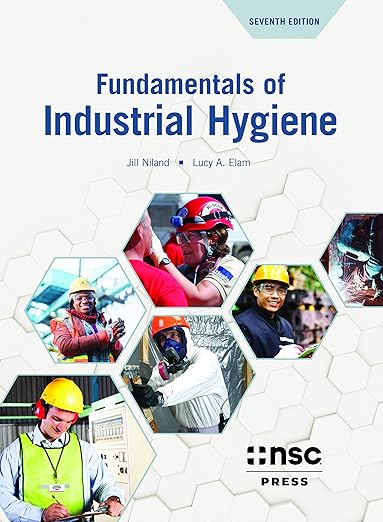
1. The BCRSP-recommended textbook
Standard textbook content. But — and this is important — I did not read it cover to cover. I used it the same way a doctor uses a reference manual: I went to it when I had a specific question I needed to answer.
As an Amazon Associate, SPEP earns from qualifying purchases.
2. My own practice-exam platform (SPEP)
I built SPEP (this website) as part of my own prep. I wanted case-based, blueprint-aligned questions with a radar chart showing my weak domains. No existing product did exactly that, so I built it. Every practice set mapped my score against all six CRSP domains.
3. Google NotebookLM
NotebookLM is free from Google. I uploaded textbook chapters, my own notes, and exam blueprints into it, and it generated summaries, Q&A sessions, and audio overviews. It was the fastest way I found to convert dense textbook material into something my brain could retain.
The method that actually worked: reverse learning
The core insight
Do not start by reading the textbook. Start by doing practice questions.
The conventional advice is: read the textbook, make notes, then test yourself. I tried that approach early in my CRST prep and it was slow, unrewarding, and I kept forgetting content. So I reversed the order.
- Take a blueprint-balanced practice set across all domains
- Look at the radar chart — which domain is lowest?
- Go to the textbook and read only that chapter
- Re-test
- Repeat for the next weakest domain
This works for three reasons. First, reading with a specific unanswered question in mind makes the content stick. Second, you never waste time re-reading content you already know. Third, you build the exact skill you need on test day — answering scenario questions — instead of just building your ability to read about safety.
The biggest mistake I almost made
When I started prepping for CRST, I tried to memorize everything. Every statistic, every acronym, every standard number. It was exhausting and — worse — it didn’t match how the exam is written. The CRSP especially is a judgment exam, not a memorization exam.
Here is what I learned the hard way:
- Do not try to memorize all the content. The textbooks are too long and the exam rewards judgment over recall.
- Working experience is important. Every concept you read should map to something you have seen on a site, in a meeting, or in a report. If a concept has no real-world anchor in your head, you will forget it.
- Merge new knowledge with daily work. Every workweek, I picked one concept from my prep and consciously looked for it in my day job. That repetition was more powerful than any flashcard stack.
- Convert the textbook into multiple media. I turned chapters into summaries, audio, my own flashcards, and my own practice questions. The act of converting the material was where the learning happened — not the reading.
- Make your own questions. Writing a good multiple-choice question on a topic forces you to understand it from both sides. This alone doubled my retention.
- Learn from each exam attempt. Every practice set is a diagnostic, not a grade. The goal is to find weaknesses, not to score well.
What was different on exam day
For the CRST
The CRST tested more statistical numbers and standard values than I expected. I remember being grateful I had drilled frequency rate, severity rate, and threshold limit values before walking in. If you are preparing for the CRST, spend extra time memorizing numeric standards and calculation formulas.
For the CRSP
The CRSP was almost entirely scenario-based critical thinking. Nearly every question asked the same implicit question in different ways: “If you were a senior HSE advisor, how would you handle this?”
The problems were not about technical values. They were about:
- Management — how to get a programme implemented, how to prioritize, how to budget
- Compliance — how to respond to an inspector, how to interpret legislation, how to handle an order
- Coworker relationships — what to do when an operations manager pushes back, how to work with a union, how to influence executives
For most CRSP questions, every answer option was defensible. My job was to pick the best response — the one a seasoned safety professional would choose. Two habits helped me on test day:
- I read each question as if I were already a senior advisor. Not a junior analyst, not a textbook author — a seasoned advisor being asked for a recommendation.
- I eliminated the obviously-junior answer first. Usually at least one option was “technically correct but would embarrass you in front of an executive.” Cut that one. Then pick between the remaining two or three.
As an Amazon Associate, SPEP earns from qualifying purchases.
My 6-month plan, month by month
Month 1 — Orient and diagnose
Read the BCRSP blueprint. Take a full diagnostic practice exam. Identify your two weakest domains. Do not start reading the textbook yet.
Months 2–3 — Weak-domain deep work
Alternate days: practice questions in your weak domain, then read only the textbook sections that match. Use NotebookLM to generate summaries. Re-test weekly.
Month 4 — Broaden coverage
Expand practice to all six domains. Start doing mixed-domain practice sets. Write your own questions for each weak area to cement understanding.
Month 5 — Case-based practice
Shift to case-based scenarios. The exam has 25–35% case-based questions and they drain more energy than independent questions. Practice reading a scenario and answering 3–5 follow-ups in sequence.
Month 6 — Full simulations and taper
Two full 4-hour simulations under exam conditions. Review every missed question — not to memorize it, but to understand the reasoning. Last week: reduce volume, sleep more, trust the work.
If I had to do it again
I would make three changes:
- Start with practice questions from day one — not week three. My first weeks of CRST prep were wasted reading.
- Use NotebookLM earlier. I discovered it mid-way through prep. It would have saved me weeks.
- Do case-based questions earlier. I left them to the last month for CRST and ran out of time. For CRSP I started them in month 3 and it was much better.
Start with a diagnostic, not a textbook
The same reverse-learning method is built into SPEP. Take a free 20-question mini-exam across all six CRSP domains — your radar chart tells you exactly which one to study next.
Try the Free CRSP Mini-ExamNo sign-up. No credit card. Results include radar-chart weakness analysis.
→ Or try a timed CRSP Mock Exam Rehearsal (14 questions, real exam pacing)Accident Prevention Manual for Business & Industry, 14th Edition
The BCRSP-recommended reference I used for both my CRST and CRSP exams. Covers all major domains: hazard identification, controls, safety management systems, legal frameworks, and industrial hygiene.
View on Amazon.ca →As an Amazon Associate, SPEP earns a small commission at no extra cost to you.
Frequently asked questions
How long did you study for the CRSP?
Six months total. Roughly 1–2 hours on weekdays and 3–4 hours on weekend days — 8–14 hours a week over 26 weeks, or approximately 200–350 focused hours.
Did you take a paid prep course?
No. I passed both exams without a paid course. My stack was the BCRSP-recommended textbook, practice questions (I built SPEP for my own prep), and Google NotebookLM to convert chapters into summaries and Q&A.
What is the reverse-learning method?
Start with practice questions, not the textbook. Use your scores to find which domains are weakest, then read only the specific textbook sections that address those gaps. This is faster and more memorable than reading cover to cover.
What is the biggest CRSP prep mistake?
Trying to memorize everything. More than 75% of CRSP questions test application or critical thinking, not recall. Candidates who over-memorize struggle on case-based scenarios. Work experience and applied judgment matter more than flashcards.
What is the single biggest difference between CRST and CRSP on exam day?
CRST rewards memorizing statistics and technical standards. CRSP rewards judgment — most questions ask “what would a senior HSE advisor do?” and the problems are about management, compliance, and coworker relationships more than technical values.
Can I pass the CRSP without work experience?
You cannot apply without 48 months of OHS experience, so no candidate writing the CRSP is truly inexperienced. But even with minimum experience, real workplace situations make the exam much easier because questions are written to mirror real decisions. Actively merge your study with your day job.
As an Amazon Associate, SPEP earns from qualifying purchases.